Skip to content
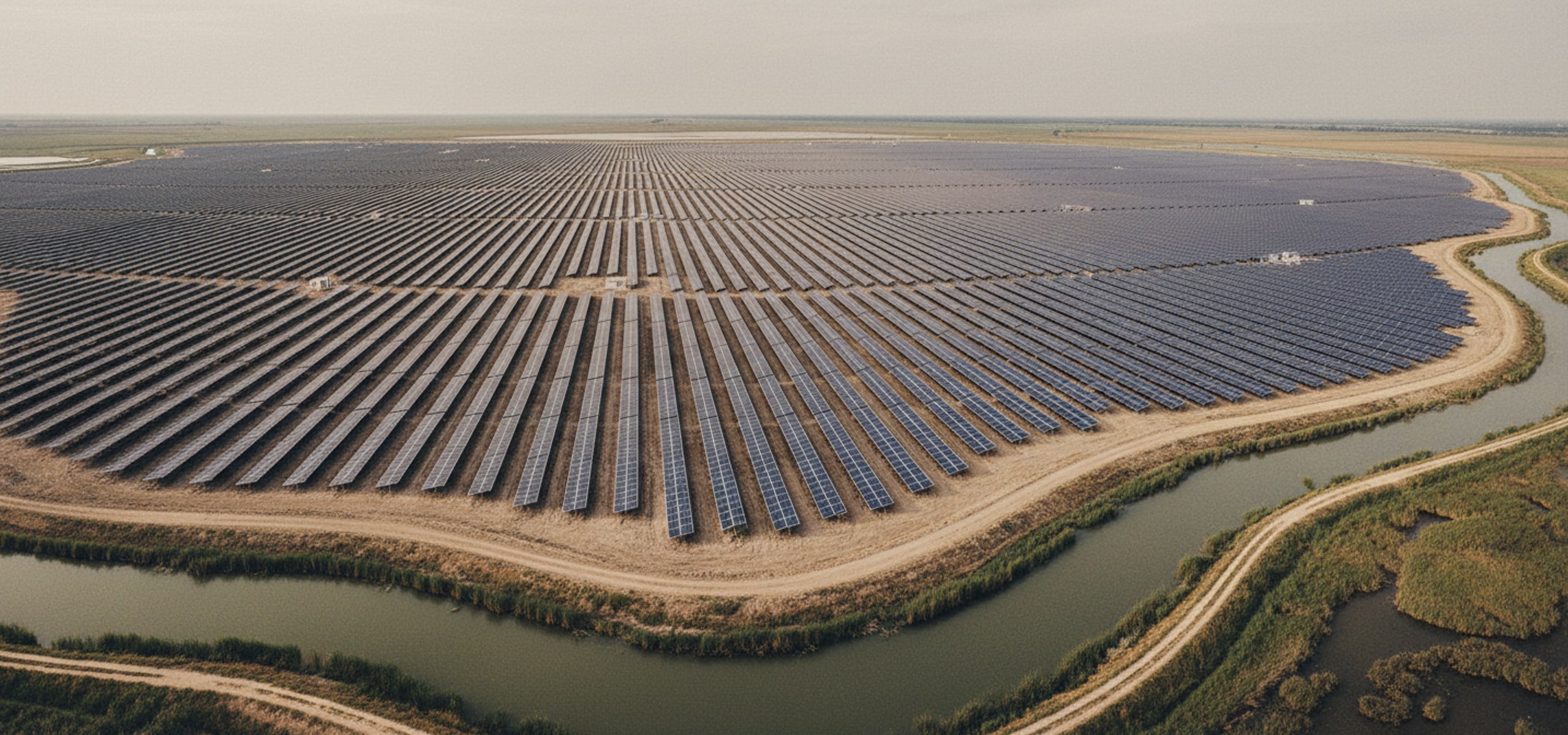
Rows of solar panels across flat delta landscape under wide open sky

Solar & Renewable Energy

Utility-scale solar, rooftop and floating solar, wind, and grid interconnection — land aggregation, power purchase agreements, tariff negotiation and concessional finance access.

Utility-scale generation and distributed capacity.

Bangladesh built its power system on domestic natural gas and has progressively converted it to imported fuel as domestic fields declined. That single fact — the shift from a domestic to an imported fuel base — is the strongest argument for renewable generation in the country, and it is a stronger argument than any climate commitment. Solar capacity is the only significant addition that carries no exposure to fuel import prices or to foreign exchange availability.

The published national ambition is 40 per cent clean energy by 2041, with a solar roadmap beneath it. The Sustainable and Renewable Energy Development Authority carries the promotional mandate, the Power Development Board and its subsidiaries contract generation, the Power Grid Company owns transmission, and the Energy Regulatory Commission licenses and sets tariffs. Infrastructure Development Company Limited has a long record financing distributed renewables and remains a route to concessional capital.

The obstacle is land. Bangladesh has among the highest population densities in the world and its flat land is farmed. Utility-scale solar requires contiguous, unencumbered, flood-safe parcels close to an evacuation point, and assembling those is a facilitation problem long before it is an engineering one. Rooftop, floating and agrivoltaic configurations exist in this market precisely because the ground-mount option is scarce.


Stated national ambition40 per cent clean energy by 2041
Promotional authoritySREDA
Licensing and tariff regulatorBERC
Transmission and interconnectionPower Grid Company of Bangladesh
Dominant constraintContiguous, grid-adjacent, flood-safe land
Configurations in playGround mount · rooftop · floating

Structural and institutional reference points. Figures are stated only where they are matters of public record.


What is available, what stands in the way, and what we do about it.

  • Solar is the only material capacity addition free of fuel import and foreign exchange exposure — a structural argument independent of climate policy.
  • Rooftop solar across the export manufacturing estate is commercially compelling: the load is on site, the roof area already exists, and international buyers increasingly require it.
  • Floating solar on reservoirs, water bodies and disused ponds sidesteps the land constraint that governs ground-mount development.
  • Net metering and captive generation frameworks allow industrial offtake without full dependence on the single-buyer model.
  • Concessional and blended finance is genuinely available for renewables through development institutions and domestic vehicles carrying a renewables mandate.
  • Land aggregation dominates. Parcels must be contiguous, unencumbered, above flood level and close to an evacuation point, and very few are all four at once.
  • Grid evacuation capacity does not reliably exist where the land does. Interconnection studies must run alongside land assembly, not after it.
  • Power purchase agreement terms, tariff denomination and the payment security package determine bankability, and each is negotiated rather than standard.
  • Payment cycles in the power sector have been a persistent concern for independent producers. Security arrangements matter as much as headline tariff.
  • Seasonal flooding, cyclone loading and soft soil conditions raise capital cost per megawatt relative to drier comparator markets.
  • Site identification and land aggregation — the workstream that determines whether a utility-scale project exists at all.
  • Running interconnection feasibility in parallel with land assembly, so evacuation capacity is proven before a parcel is committed.
  • Structuring offtake: single-buyer agreement, captive supply, net metering or corporate power purchase, and the approvals each route requires.
  • Accessing concessional and blended finance, and preparing the project to the standard those lenders assess against rather than the standard a sponsor assumes.
  • Sequencing approvals across the promotional authority, the regulator and the transmission company so the programme timetable is defensible.

The bodies whose mandates a project in this sector will touch. Understanding what each one is responsible for — and what it is not — is the first piece of work on any engagement.
Sustainable and Renewable Energy Development Authority (SREDA)
The statutory body promoting renewable energy deployment and energy efficiency across the economy.
Bangladesh Power Development Board
The principal public generator and the single buyer for much of the country’s contracted generation capacity.
Power Grid Company of Bangladesh
Owns and operates the national transmission network and governs interconnection and evacuation capacity.
Bangladesh Energy Regulatory Commission
The independent regulator responsible for licensing generation and determining tariffs.
Infrastructure Development Company Limited (IDCOL)
A government-sponsored financial institution with an established record financing renewable energy and distributed generation.
Power Division, Ministry of Power, Energy and Mineral Resources
Sets sector policy and approves the procurement of generation capacity.

These institutions are named because they are the relevant public bodies in this sector. Fratres claims no relationship with, endorsement by, or mandate from any of them.
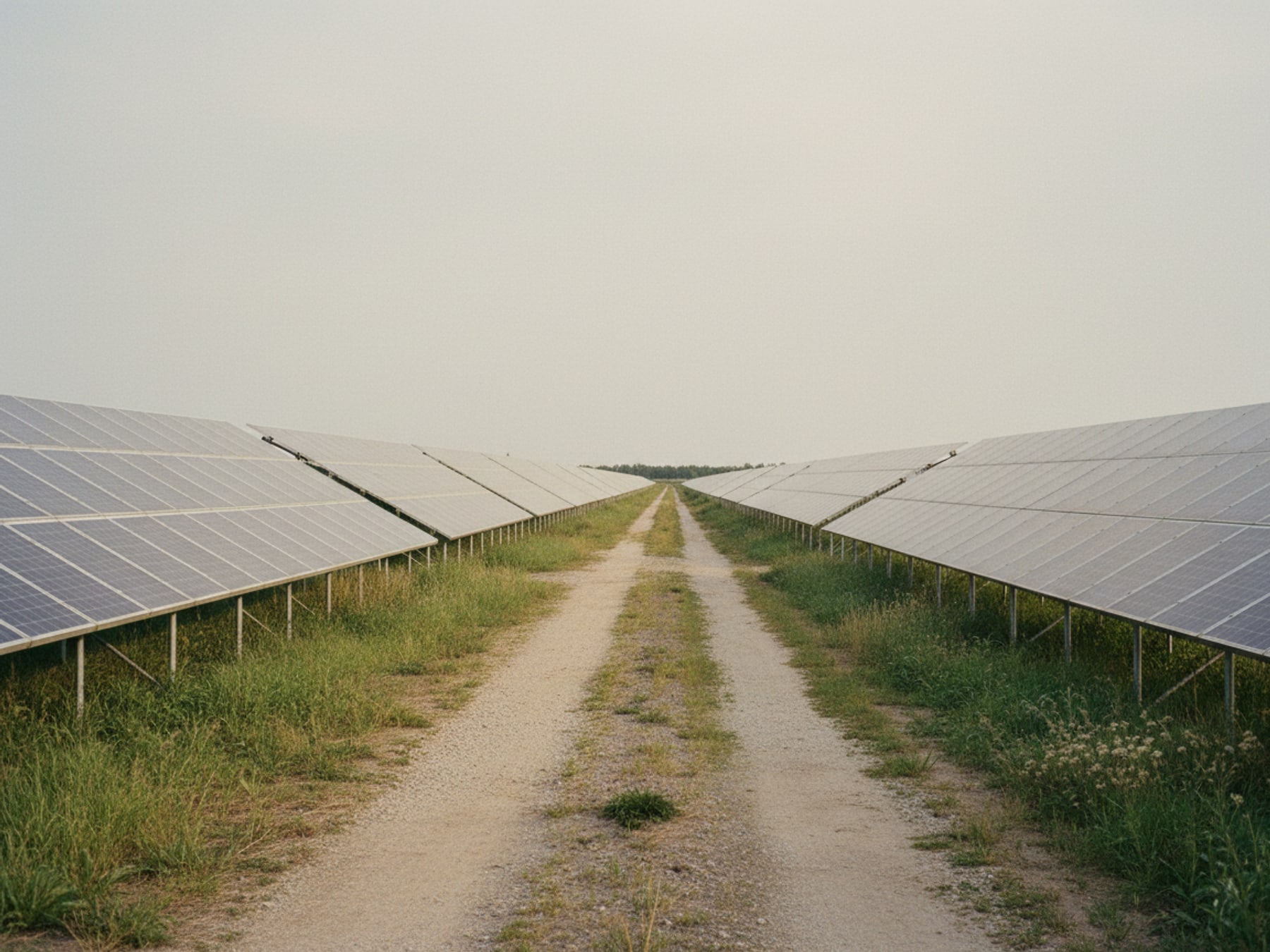
Rows of solar panels across flat delta landscape under wide open sky

Utility-scale solar is a land problem.

Bangladesh does not lack irradiance and it does not lack offtake appetite. What it lacks is contiguous, unencumbered, flood-safe land within reach of an evacuation point. Every serious constraint in the sector reduces to that sentence.

We therefore treat land and interconnection as a single workstream, run before the engineering package is priced. A site that cannot evacuate is not a site, and a parcel with an unresolved title chain is not a parcel, however good the resource data looks.

Our approach

Solar & Renewable Energy: begin a conversation.

The most useful first conversation is a specific one — the asset, the counterparty, or the approval that has stalled. Enquiries are reviewed by the partnership and answered directly.

Make an enquiry